
Nobody warns you about the silence.
You expect the cold when you visit Darjeeling in January — you’ve read about it, you’ve packed for it, you’ve had the conversation with at least one well-meaning relative who told you it was too cold to go, and you should wait until April instead. What you don’t expect is the quality of the silence that comes with that cold.
The way the town settles into itself in January. The way the streets empty out after eight in the evening. The way the mountains — when they appear, and in January they appear with startling frequency — seem to stand closer than they should, as if the cold air has compressed the distance between you and 30 km of snow-covered Himalayan ridge.
Darjeeling in January is not the easiest version of this place. The pipes freeze some mornings. The roads need watching. The fog at lower altitudes can ground flights at Bagdogra and rearrange your plans without asking.
But for a particular kind of traveller — one who dresses properly, plans intelligently, and finds deep satisfaction in a hill town that isn’t performing for anyone — January might honestly be the most rewarding month of the entire year.
Let me take you through it properly.
What the Cold Actually Feels Like
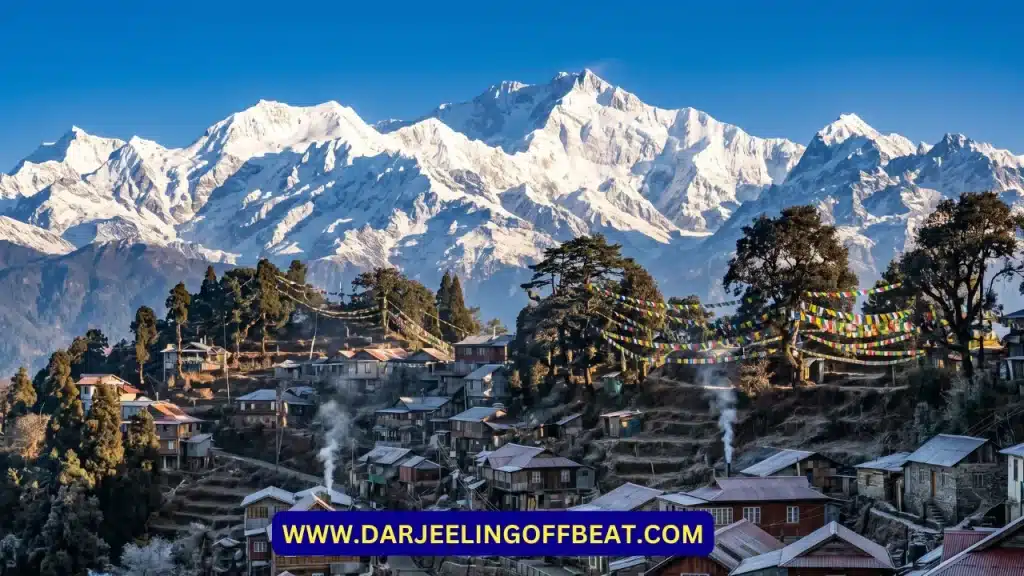
January is the coldest month in Darjeeling, and there’s no softening that fact worth attempting. During the day, temperatures generally sit between 8°C and 13°C — cold enough that you want layers, warm enough that a brisk walk through the tea gardens in good winter gear is genuinely enjoyable.
The sun at this altitude in January has a quality to it that’s hard to describe: it feels direct, close, almost aggressive in its brightness even when the air temperature says otherwise. You’ll want sunscreen. I know that sounds counterintuitive when you’re watching your breath make little clouds in the morning air, but trust it.
Nights are a different matter entirely. The temperature drops to somewhere between 2°C and 6°C after dark, and on particularly clear nights it can push toward zero or below. The cold in Darjeeling at night isn’t the wet, heavy cold of the plains — it’s dry and sharp, and it gets through inadequate clothing with real efficiency.
This is the cold that makes the old wood-burning bukharis in the heritage hotels earn their keep. If your room has one, you’ll understand by the second evening why people specifically request them.
And the mornings. Well, if you’re doing Tiger Hill — which you should, even knowing the odds aren’t perfect in January — you’ll be leaving somewhere around 4 AM. At that hour, Darjeeling in January is producing its most severe temperatures. Thermal base layer, fleece, heavy windproof jacket, gloves, hat over the ears, scarf. Not optional. The people standing at the Tiger Hill viewpoint railing who didn’t pack properly are easy to identify. They’re the ones not looking at the mountains.
What makes January’s cold entirely worth enduring is what it does to the sky. The dry winter air that arrives from the direction of the Tibetan Plateau strips away the atmospheric haze that softens the Himalayan views for most of the year, and what’s left is clarity. Real clarity — the kind where Kanchenjunga looks almost absurdly close and sharp, where on exceptional mornings you can pick out Everest, Makalu, and Lhotse on the horizon some 225 kilometres away, where the blue above the peaks is so saturated it barely seems real.
This is the view that people who specifically visit Darjeeling in January have been chasing. And when it delivers, it delivers completely.
The Tiger Hill Question — Will You Actually See the Sunrise?

Let’s be honest about this, because false promises about Tiger Hill do nobody any favours.
In January, the probability of getting a clear, unobstructed sunrise view from Tiger Hill is roughly 60 per cent. That’s lower than November and December, which sit closer to 75 per cent. The reason is January’s valley fog — a specific atmospheric behaviour where cold night air settles into the valleys and, as the morning progresses, rises in thick banks that can cover the viewpoint even when the town below is clear.
The fog is layered and unpredictable in ways that even experienced local drivers and guides can’t always call in advance.
So you might go to Tiger Hill on a January morning and find the entire massif displayed for you in extraordinary, gold-lit detail from the moment the first light hits the peaks. Or you might stand in the dark for an hour and a half and watch a wall of white fog do absolutely nothing cooperative.
Here’s the thing, though. Even on the foggy mornings, there’s something worth experiencing in having tried. The other people at the viewpoint, the shared quiet anticipation, the cold doing its work on everyone equally — it has its own texture. And if the fog parts even briefly, even for ten minutes, the view that comes through it has a dramatic quality that a clear morning sometimes doesn’t.
Go. Take the chance. Ask your hotel to arrange the transport the night before rather than scrambling at 3:30 AM. Get there early enough to find a good spot at the railing. Bring something hot in a flask. And let January do what January does.
Getting There — Planning Around the Fog
Most people coming to Darjeeling in January are travelling from somewhere in the West Bengal plains, or further afield from Delhi or Mumbai. The fundamental route is the same regardless of origin: get to New Jalpaiguri (NJP) or Bagdogra first, then deal with the mountain road.
The train to NJP is the most reliable option for the plains leg. From Kolkata, several services run overnight, arriving at NJP in the early morning — the Darjeeling Mail being the classic choice. The Vande Bharat Express has cut journey times considerably if you’re coming from the southern districts. From Delhi, the journey is longer but perfectly manageable in a decent sleeper berth.
One thing worth knowing specifically about January travel: the highway stretches between the southern districts and Siliguri — particularly NH12 and NH27 — experience genuine dense fog in the early morning hours. This isn’t the romantic, misty fog of the hills.
It’s the kind where visibility can drop to a few hundred metres, and driving becomes a matter of following road markings more than what’s ahead of you. If you’re in a private vehicle, the practical advice is to time your plains travel for daylight and use low-beam headlights if you encounter fog — high beams reflect off the water droplets and create a white-out effect that makes things considerably worse.
From NJP, a private taxi to Darjeeling takes three to four hours and costs somewhere around ₹2,500 to ₹3,500, depending on vehicle type and season. January is off-season, so prices are generally softer than in October or December — worth knowing if you’re budget-conscious.
Shared jeeps from Siliguri are cheaper (₹300 to ₹400 per person), but they carry up to ten passengers and the seats on a winding mountain road for four hours test most people’s goodwill. Private is almost always worth the difference in January when the roads can have morning frost on the higher sections, and you want a driver who’s fully focused.
If you’re flying, a specific January warning: Bagdogra Airport is genuinely affected by fog in this month. Morning flights face the highest risk of diversion to Kolkata or delay until visibility improves, which typically happens by mid-morning.
Build flexibility into your arrival day if you can. Book afternoon flights if given the option. And don’t plan a connection from Bagdogra to your hotel and straight up to Tiger Hill the same evening — January can rearrange those plans without ceremony.
Snowfall — Where, When & What to Actually Expect
Darjeeling in January and snowfall is a topic that generates more disappointment than it should, mostly because expectations are set incorrectly.
Inside Darjeeling town — sitting at around 6,700 feet — snowfall is genuinely rare. Not impossible. Not unheard of. But the kind of event that happens perhaps once in a decade within the town limits itself. The most recent significant snowfall that covered Mall Road properly was in February 2022. Before that, there were brief events in December 2018 and earlier in the 2000s.
When it does snow in town, the transformation is extraordinary — the colonial architecture frosted white, every chimney smoking, the streets empty and hushed, the whole place looking like something from a story. But planning your January trip around this happening would be optimistic to a fault.
What you can plan around is snow at higher elevations, and this is where January genuinely delivers.
Tiger Hill, just 11 kilometres from town at 8,482 feet, sees snow with real frequency in January — a few inches of accumulation is common, and the road access can occasionally freeze enough to require care.
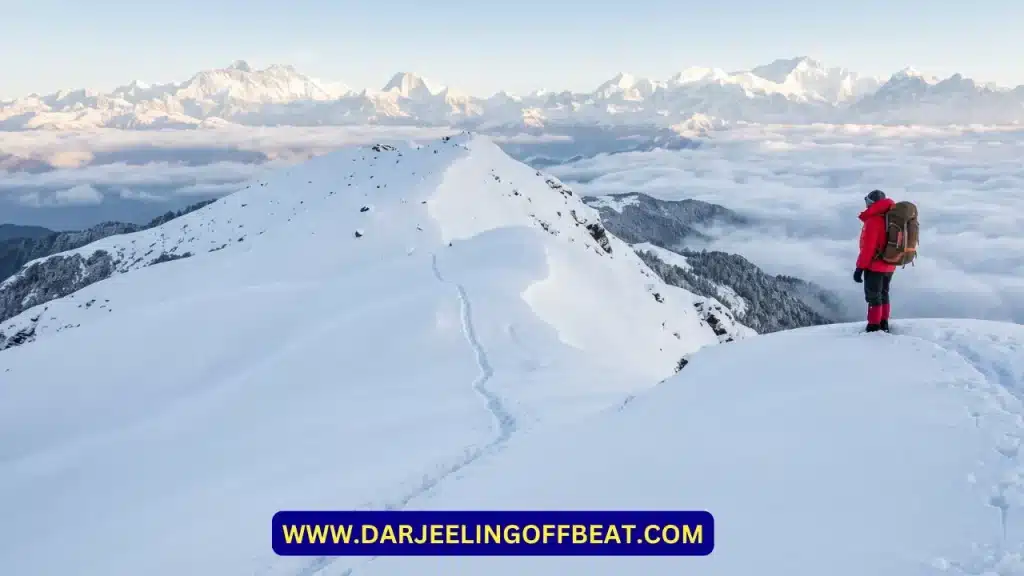
Ghoom and Jorebunglow, just above the town, get occasional snow that sticks. And Sandakphu — at 11,929 feet, the highest point in West Bengal — is reliably snow-covered from December through February, sometimes with three feet of accumulation or more on the upper ridges.
If you want to see proper winter snow in January, Sandakphu is where you go. The access is via Manebhanjan, about 26 kilometres from Darjeeling town, from where jeeps (Boleros, mostly) navigate a boulder-track road to the summit area. This road in January requires respect — black ice is possible, the gradients are serious, and you need a driver who knows it well.
But the view from Sandakphu on a clear January day — the entire four-peak Himalayan panorama of Everest, Makalu, Lhotse, and Kanchenjunga laid out in front of you across a landscape of deep snow — is one of the more extraordinary things available to a traveller in India. Full stop.
The Water Situation — Something Visitors Should Know
This is the part of Darjeeling in January that guidebooks tend to omit, and it’s worth being straightforward about.
The town’s water infrastructure is old — designed during the British era for a much smaller population, now serving over 120,000 residents plus seasonal visitors. In January, when temperatures drop overnight toward zero, the uninsulated water pipes across the town freeze. A frozen pipe means no water until the midday sun warms things enough to restore flow, or until someone with a hairdryer and patience sorts it out manually.
In practical terms for visitors: don’t expect hot water or reliable water pressure at 6 AM in many budget guesthouses and homestays. Mid-range and better properties generally manage this better, either through insulated systems, electric geysers with backup storage, or — in the case of higher-end hotels — water purchased from private tankers when municipal supply fails. It’s not glamorous, but it’s the honest reality of January mornings in Darjeeling.
The workaround is simple: plan your morning routine around it. Shower the night before when the water pressure is better. Keep a bottle of drinking water in the room. Ask your hotel specifically about hot water availability when you check in, rather than discovering the situation at 5 AM before Tiger Hill. Most honest guesthouses will tell you exactly what to expect.
High-end properties — the Windamere, the Elgin, the newer luxury hotels — handle this considerably better and the experience there is largely insulated from these realities. But even at a mid-range property, a little advance knowledge makes the whole thing manageable rather than frustrating.
The Roads After 2025 — What Changed
If you’re visiting Darjeeling in January 2026, it’s worth knowing that the region is still recovering from serious landslides that hit in October 2025. Torrential rain — over 300mm in twelve hours in some areas — caused significant damage across Darjeeling and Kalimpong districts, with roads, bridges, and hundreds of households affected.
The Rohini Road, one of the key alternate routes to Darjeeling, reopened at the start of January 2026 after a three-month closure — good news for connectivity generally. The Hill Cart Road has a compromised section near Tindharia that currently restricts heavier vehicles. The Mirik route is operating via a temporary bridge that’s functional but requires monitoring in heavy rain.
The practical implication for January visitors is simple: check road status before you travel, particularly if you’re coming via less common routes or planning to visit Mirik or Kalimpong as part of the trip. Your hotel front desk is usually the best source for current road information — they hear about closures before official channels update. And carry some extra time in your schedule. January’s weather is generally stable and dry, which helps, but the underlying road infrastructure in parts of the district needs watching.
January Culture — The Festivals Worth Knowing About
One of the genuinely underappreciated aspects of visiting Darjeeling in January is the cultural calendar. The local Bhutia, Lepcha, Tibetan, and Nepali communities celebrate several significant festivals during this month, and if you time your trip even loosely around them, you’ll experience a version of the place that most tourists completely miss.
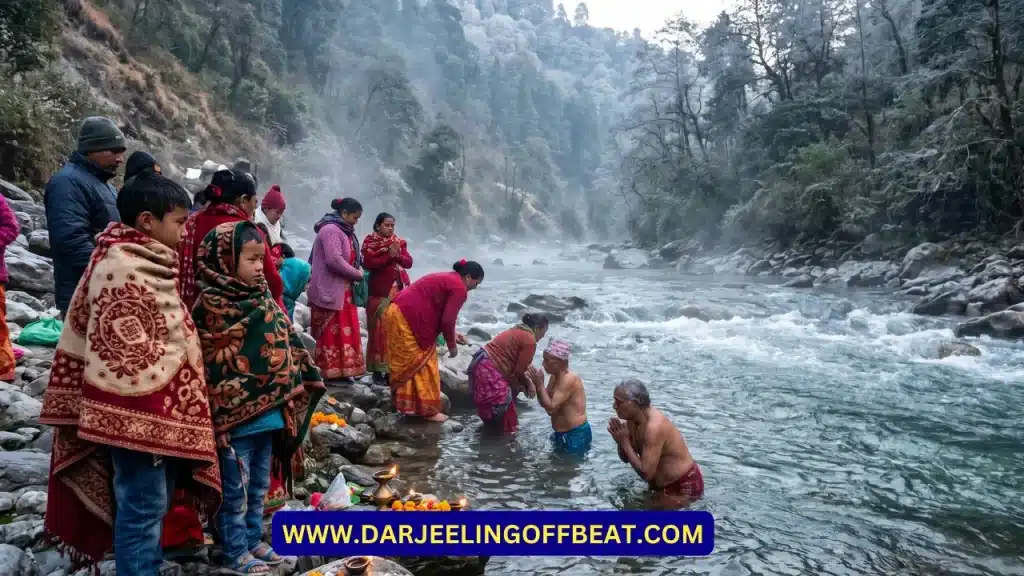
Maghe Sankranti falls in mid-January and marks the transition toward the spring equinox in the Nepali calendar. It’s a festival built around ritual bathing in rivers — the Teesta and various hill streams — with the belief that cold water at this particular time of year brings good fortune. The food associated with Maghe Sankranti is wonderful and deeply practical: till laddoos made from sesame seeds, chaku, which is a dark molasses sweet, and tarool — yam cooked in various ways — all of which are high-calorie, warming foods designed for winter. If you’re visiting in mid-January and your homestay family is celebrating, accept any food offered. It will be excellent.
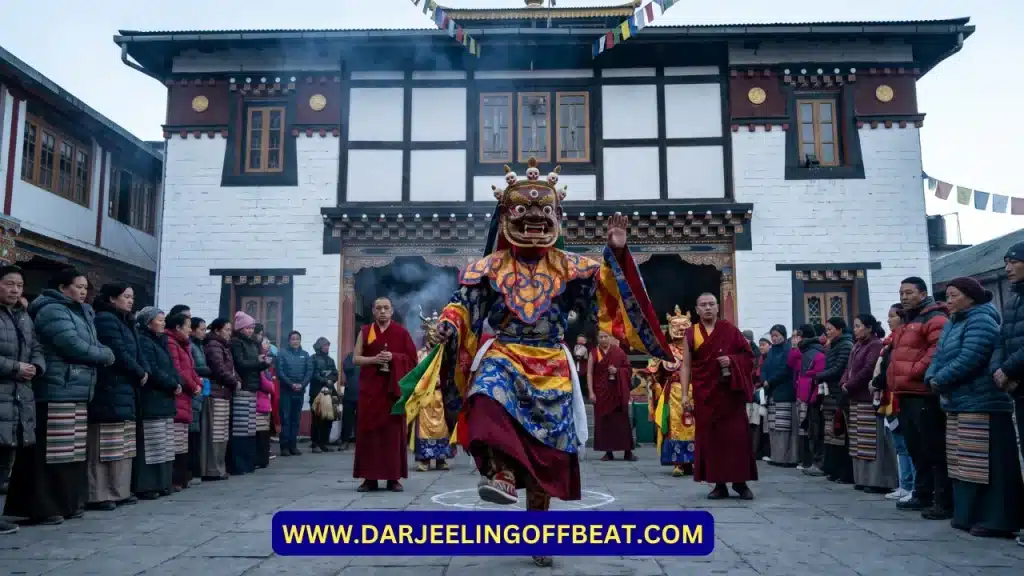
Losar — the Tibetan New Year — falls in late January or February, depending on the lunar calendar, and when it falls in January, the monasteries around Darjeeling come properly alive. Ghoom Monastery and Dali Monastery both host cham dances: masked religious performances where monks enact the defeat of negative forces, accompanied by traditional instruments that carry across the cold air in a way that feels genuinely ancient. These are not tourist performances. They’re the real thing, open to respectful visitors, and attending one is a quietly extraordinary experience.
The Darjeeling Winter Festival, which has been running since 2015, takes place on the Chowrasta Mall stage and brings together local musicians, traditional dance groups, and contemporary bands from across the hills. It’s a deliberate effort to draw visitors during the lean season, and it succeeds on its own terms — the atmosphere of a small cultural festival on a hilltop, with the cold keeping everyone close to the stage and the mountains somewhere behind the evening sky, is genuinely charming.
Where to Stay in January
January is the off-season, and hotel rates reflect this, which is one of the better-kept secrets of visiting Darjeeling in January. Properties that charge premium rates in October or during Christmas week are generally accessible and sometimes significantly discounted in January. This includes some of the heritage hotels that are otherwise aspirational for budget-conscious travellers.
The Windamere is the classic choice for winter, specifically. Established in 1841, it maintains its traditional coal and wood-burning bukharis — the cast-iron stoves that provide a deep, radiant heat that modern electric heaters genuinely don’t replicate. Sitting in the Windamere lounge with the bukhari going and a pot of tea in proper china while the January cold does its work outside the windows is one of those travel experiences that stays with you in a specific way. The Elgin has its fireplaces and its colonial-era warmth. Both are more accessible in January than in peak season.
For mid-range stays, the key question to ask any property before booking is straightforward: what’s the heating situation and how does the hot water system work in January? A good property will answer this honestly and specifically. An evasive answer tells you what you need to know about their winter preparedness.
Budget guesthouses and homestays work well in January if your expectations are calibrated correctly. You’ll want a portable heater in the room — most decent properties provide one, sometimes for a small additional charge.
Electric blankets are available at the better homestays. Wooden-floored rooms insulate better than stone or tile — worth specifying when you book. And the compensating factor for any physical inconvenience is always the same in Darjeeling: a homestay family that feeds you well, a window with a view that no amount of money could improve, and a pace of life in January that makes even a basic room feel like exactly the right place to be.
Sandakphu in January — For the Serious Visitor
If you’ve been to Darjeeling before and you’re specifically visiting in January for the mountain views and the snow, Sandakphu is the logical extension of the trip.
The access is from Manebhanjan, reached by shared or private vehicle from Darjeeling in about an hour. From Manebhanjan, jeeps — Boleros, in practice, navigate the boulder-track road to the ridge. In January, this road can carry ice and snow, so the vehicles and drivers need to know what they’re doing, and they generally do. The round-trip jeep hire runs around ₹4,800, guides are mandatory and cost roughly ₹1,500 to ₹2,000 per day, and accommodation in the teahouses and homestays along the route runs ₹600 to ₹900 per night, including basic meals.
The gear requirements are not negotiable in January. Four proper layers minimum — thermal base, fleece mid-layer, a down jacket rated for at least -10°C, and a windproof outer shell. Insulated water bottles, because plastic bottles freeze. High-UV glacier glasses, because snow blindness at altitude is real and genuinely awful. A sleeping bag rated for -15°C, because the blankets provided in teahouses are not sufficient for January nights at 11,000 feet.
What you get in exchange for this preparation is the single most dramatic Himalayan panorama accessible from West Bengal — four of the world’s five highest peaks visible simultaneously on a clear January morning, the entire ridge in deep snow, absolute silence except for the wind. It’s the kind of view that permanently reorganises your sense of scale.
The wildlife in Singalila National Park adds another reason to be in this area in January. The higher elevations push bird and animal life down to the temperate forests between 7,000 and 9,000 feet. Red pandas, more visible in January as they forage lower in the bamboo groves, are the famous draw — but the birds are extraordinary too. Satyr tragopan, blood pheasant, Himalayan monal, various thrushes and rosefinches moving through on winter migration routes. Birders who visit Darjeeling in January specifically for Singalila tend to come back for it repeatedly.
What to Eat — January Is the Right Season for This
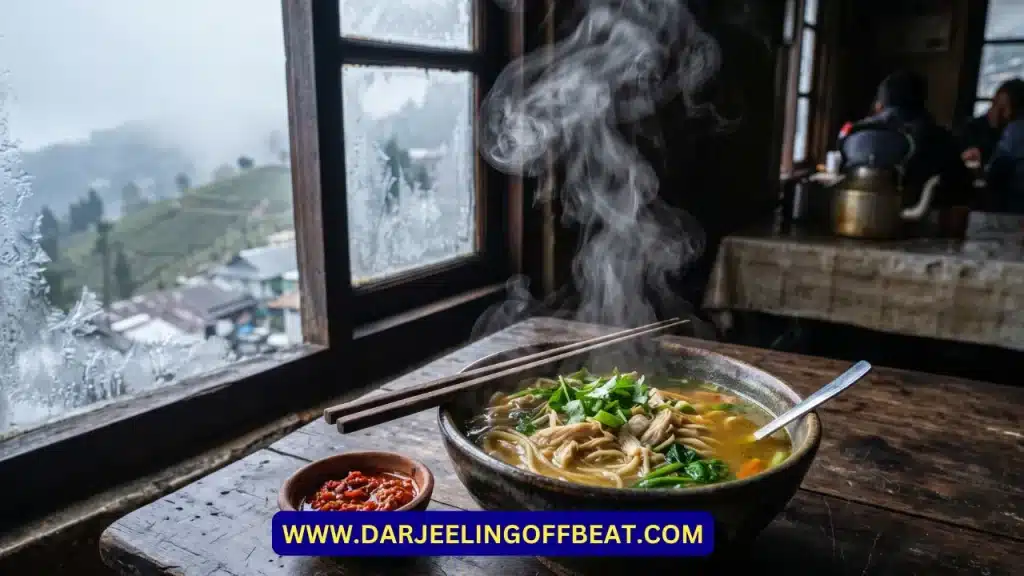
January food in Darjeeling is mountain food at its most purposeful. The local culinary tradition understands cold weather in a deep, practical way, and almost everything worth eating here in winter is built around warmth and substance.
Thukpa is non-negotiable. This Tibetan noodle soup — broth built on ginger, garlic, and bone, with noodles and meat and whatever vegetables are seasonal — is the food that January in Darjeeling was made for. A large bowl at any of the small local restaurants around Chowrasta costs almost nothing and does more for your body temperature than an extra layer of clothing. The pork broth version is particularly good if you eat meat. Seek it out specifically.
Momos are everywhere, and they’re consistently excellent — steamed, served with the hot chilli achar that every local establishment makes a little differently. Eating them at a street stall in the cold, standing up, is a quintessential Darjeeling experience at any time of year, and in January the warmth from the steamer is particularly welcome.
Churpi is something worth trying if you haven’t before — hardened yak-milk cheese, chewed slowly by locals as a sustained energy source during outdoor work or travel. It’s an acquired texture, but the flavour is good, and it’ll keep you warm and occupied on any cold morning walk.
For something more ceremonial, look for gundruk soup at local family restaurants. Fermented and dried leafy greens in a tangy, flavourful broth — it’s traditional winter food that not enough visitors seek out, partly because it doesn’t appear on tourist menus. Ask for it. Worth the extra minute of searching.
Darjeeling tea in January is, of course, its own entire conversation. The gardens are dormant — no first flush or second flush to harvest — but good tea from previous seasons is available at every tea room and boutique in town. The Windamere tea service is the ceremonial option. Glenary’s is warmer and more casual. Nathmulls on the Mall is where serious tea buyers go. All three are worth your time, and none of them will disappoint.
Chang — fermented millet served warm in a bamboo tongba container, drunk through a bamboo pipe — is the local answer to January cold evenings. Some local restaurants serve it if you ask. It’s low in alcohol, distinctive in flavour, and deeply appropriate for the season. Try it at least once.
The Shopping — Bhutia Market & What to Look For
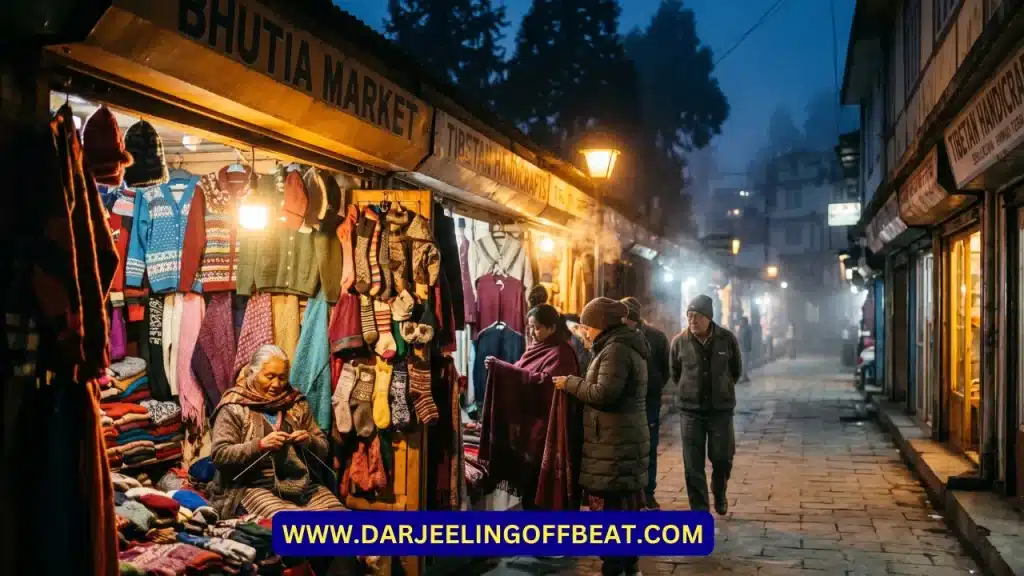
The Bhutia Market, tucked into the narrow lane next to Nathmulls Tea Store, is one of Darjeeling’s more overlooked pleasures, and in January it’s at its most functional — these are the warm things, sold by the people who make them, at prices that are honest and open to gentle negotiation.
Hand-knitted woollens, leather-lined gloves, traditional Gorkha khukris, Tibetan-style sweaters and shawls. A good pair of woollen gloves or a decent beanie costs between ₹100 and ₹300. The traditional sweaters are the real find — thick, warm, locally made, and completely different from anything mass-produced. If you forgot to pack something important for the cold, the Bhutia Market will solve your problem at a fraction of what you’d spend in a city outdoors shop.
For snow gear specifically — the heavier stuff like proper down jackets and insulated boots — you’ll need to either bring it or rent it near Manebhanjan for the Sandakphu section. Darjeeling town itself doesn’t have a reliable rental market for the serious technical gear.
A Few Practical Notes Before You Go
Carry cash. January is off-season, and ATMs in the hills sometimes run low on currency between replenishments. Digital payment options can be patchy in the smaller restaurants and market stalls where January in Darjeeling is at its most authentic. ₹5,000 to ₹8,000 in cash on hand at the start of your trip is sensible insurance.
Motion sickness medicine — specifically Avomine, taken the night before your mountain road ascent — is worth packing even if you’ve never been prone to it. The hairpin turns on the Hill Cart Road affect people differently than flat-road driving, and discovering you’re susceptible four hours into the journey is avoidable.
January is legitimately the cheapest month to visit Darjeeling. Hotel rates are at their annual low, restaurants aren’t crowded, and the town isn’t performing for a crowd. If your schedule permits it at all, this is worth factoring in — the savings can be significant compared to October or the Christmas week.
Don’t plan a rushed itinerary. Darjeeling in January rewards staying an extra day or two. One morning, you get fog at Tiger Hill. The next morning, the sky is completely clear, and Kanchenjunga is so close and sharp that you’ll stand there longer than you planned. The pace of January in this town suits unhurried schedules better than packed ones.
Who January Is Really For
Darjeeling in January suits a specific kind of traveller, and there’s no dishonesty in saying that directly.
It’s for people who take cold weather seriously enough to dress for it properly rather than hoping it won’t be that bad. For travellers who find a quieter, slower hill town more appealing than a busy one. For photographers who understand that January’s light and clarity is different from every other month and worth specifically chasing.
For birders and wildlife watchers who know that Singalila in winter has things that no other season offers. For trekkers who want Sandakphu with real snow rather than the dry trail of summer. For budget-conscious travellers who want quality accommodation at off-season rates.
It’s probably not ideal for someone whose primary requirement is reliable warmth, guaranteed snowfall in the town itself, or a full and busy social scene. January Darjeeling is quieter and more demanding than April or October. It asks something of you — some tolerance for cold, some flexibility with infrastructure, some willingness to be in a place that isn’t polished or curated for tourism.
What it gives back, when you meet it on those terms, is something that the easier months simply can’t match. The mountains in January are in a different category. The clarity is in a different category. The feeling of a hill town that has settled into its truest, quietest self — with wood smoke and frozen mornings and tea that tastes the way tea is supposed to taste at altitude — is in a different category.
Go with good gear. Go with patience. Go with a flask of something warm for Tiger Hill at 4 AM.
Darjeeling in January will take care of the rest.
Have you visited Darjeeling in January? Tell us what you found — the clear mornings, the cold, the moments that surprised you. The comments are open, and real traveller experiences always tell the story better than any guide can.
FAQ
Q.1: Is January a good time to visit Darjeeling?
Ans: Yes, January is an excellent time to visit Darjeeling for the right traveller. Skies are crystal clear, mountain views are at their sharpest all year, hotel rates are at their lowest, and the town is refreshingly uncrowded. The cold is serious but completely manageable with proper winter clothing and preparation.
Q.2: How cold is Darjeeling in January?
Ans: January is Darjeeling’s coldest month. Daytime temperatures range between 8°C and 13°C — comfortable for sightseeing in good layers. Nights drop to 2°C–6°C, and early mornings at Tiger Hill can touch near zero. Thermals, a heavy windproof jacket, gloves, and a woollen hat covering your ears are essential.
Q.3: Does it snow in Darjeeling in January?
Ans: Snowfall inside Darjeeling town in January is rare — it happens roughly once a decade. However, higher elevations get reliable snow. Sandakphu (11,929 feet) is consistently snow-covered with up to three feet of accumulation. Tiger Hill and Ghoom also experience frequent snowfall. For guaranteed snow, plan a Sandakphu day trip rather than waiting for snow on Mall Road.
Q.4: What is the chance of seeing Kanchenjunga clearly from Darjeeling in January?
Ans: January offers the best mountain visibility of the entire year. The dry winter air removes atmospheric haze completely, making Kanchenjunga appear extraordinarily sharp and close. On exceptionally clear mornings, Everest, Makalu, and Lhotse — roughly 225 kilometres away — are also visible. Tiger Hill sunrise success rate in January is approximately 60%, slightly lower than in November due to valley fog.
Q.5: What should I pack for Darjeeling in January?
Ans: Pack four proper layers — thermal inners, a fleece, a down jacket rated for -10°C, and a windproof outer shell. Add woollen socks, gloves, an ear-covering hat, and a scarf. Carry high-SPF sunscreen (UV is strong at altitude), lip balm, moisturiser, motion sickness tablets for the mountain road, and sufficient cash as ATMs occasionally run low in January.
Q.6: Is the water supply reliable in Darjeeling in January?
Ans: Not always, and it’s worth knowing in advance. When overnight temperatures drop toward zero, uninsulated water pipes across town can freeze, causing low or no pressure in early mornings. Most mid-range and heritage hotels manage this better than budget guesthouses. Ask your hotel specifically about hot water availability before checking in, rather than discovering the situation at 5 AM.
Q.7: Are the roads to Darjeeling safe in January?
Ans: Generally, yes — January is one of the safer months for road travel as monsoon landslides are over and rainfall is minimal. However, morning frost can make higher road sections slippery, and dense fog on the NH12 and NH27 plains highways requires careful early morning driving using low-beam headlights. Always check the current road status before travel, especially if visiting Mirik or Kalimpong.
Q.8: What festivals happen in Darjeeling in January?
Ans: Two significant festivals make January culturally rich. Maghe Sankranti in mid-January is a Nepali harvest festival celebrated with ritual river bathing and traditional foods like til laddoos and chaku. Losar — the Tibetan New Year — sometimes falls in late January, bringing spectacular masked Cham dances at Ghoom and Dali monasteries. The Darjeeling Winter Festival also runs on Chowrasta Mall with live music and cultural performances.
Q.9: Is Sandakphu worth visiting from Darjeeling in January?
Ans: Absolutely, for prepared travellers. Sandakphu in January offers the most dramatic Himalayan panorama in West Bengal — four of the world’s five highest peaks visible simultaneously across a deep snow landscape. Access is via jeep from Manebhanjan. Essential gear includes a -15°C sleeping bag, -10°C down jacket, insulated water bottles, and UV glacier glasses. Budget approximately ₹4,800 for jeep hire and ₹1,500–₹2,000 per day for a mandatory guide.
Q.10: Is January budget-friendly for visiting Darjeeling?
Ans: January is genuinely the most budget-friendly month to visit Darjeeling. Being the off-season, hotel rates drop significantly — including at heritage properties like the Windamere and the Elgin that command premium rates in October or December. Restaurants are relaxed, taxis are more available, and tourist crowds don’t stretch the town. For travellers who are flexible about cold weather, January delivers the best value of the entire year. 🏔️
- Darjeeling in February — Love in the Hills, Clear Skies & Why This Is the Month Most People Overlook
 There’s a particular kind of morning in Darjeeling that February owns completely. The air is cold enough to see your breath, but not the bone-deep, unforgiving cold of January that makes every early start feel like a small act of courage. The sky has that clean, washed quality that only comes in the dry winter …
 - Darjeeling in January 2025 — The Coldest Month, The Clearest Skies & Everything In BetweenNobody warns you about the silence. You expect the cold when you visit Darjeeling in January — you’ve read about it, you’ve packed for it, you’ve had the conversation with at least one well-meaning relative who told you it was too cold to go, and you should wait until April instead. What you don’t expect …
- Darjeeling in December — Everything You Actually Need to Know Before You GoLet me tell you something that took me an embarrassingly long time to figure out. For years, I avoided Darjeeling in December. Too cold, I told myself. Too foggy. The kind of trip where you spend three days wrapped in every piece of clothing you own, staring at a grey wall of mist from your …
- Sittong —The Orange Village Near Darjeeling That Nobody Talks About (But Everyone Should Visit)There’s a particular kind of travel moment that’s becoming genuinely rare — the kind where you arrive somewhere beautiful and realise, with a mix of disbelief and quiet gratitude, that you’re almost completely alone there. No tour groups. No Instagram queue for the viewpoint. No touts. Just the smell of oranges in the cold air, …
- Best Time to Visit Darjeeling — A Month-by-Month Honest GuideHere’s something nobody really prepares you for: Darjeeling hits differently depending on when you show up. Go in March, and you’ll walk through hillsides exploding with rhododendrons, the air so clean it almost stings. Go in July, and you might spend two days staring at a wall of white fog from your hotel window, wondering …
- Siliguri to Kalimpong by Car: Every Route You Need to Know Before You Go (2026)Planning a road trip from Siliguri to Kalimpong? Here’s your honest, no-fluff guide to all 4 routes — NH10, Sevok Road, Pedong Road, and Reshi Road — with real distances, travel times, road conditions, and tips from people who’ve actually driven them. Let’s be honest — the moment you decide to visit Kalimpong, half the …









North Bengal's offbeat magic is my muse. I find adventure in whispering waterfalls, vibrant village life, and breathtaking Himalayan vistas. Join me as I delve deeper, seeking stories and experiences beyond the mainstream, from Darjeeling's tea havens to the unexplored corners of this incredible region