
There’s something quietly extraordinary about standing at the edge of a country and not at an airport or a formal border crossing, but on a hillside at dusk, looking across a valley into another nation’s lights. No fence in sight, no checkpoint, just a ridge and a silence and the slow understanding that the world over there — visible, close, almost familiar — operates under entirely different rules.
That’s what Chisang Village Kalimpong offers. And it offers it in a setting that most people visiting the Eastern Himalayas never find.
Tucked into the Gorubathan block of Kalimpong district in West Bengal, Chisang Village Kalimpong sits at around 4,600 feet above sea level, close enough to the Indo-Bhutan border that on clear evenings you can watch lights come on in Bhutanese villages across the Tendu Valley.
It’s the kind of geographical situation that sounds dramatic when you describe it and feels even more so when you’re actually standing there in the cooling air with Bhutan glowing quietly in the distance.
The Geography — Chisang Village Kalimpong Village on the Edge of Two Worlds
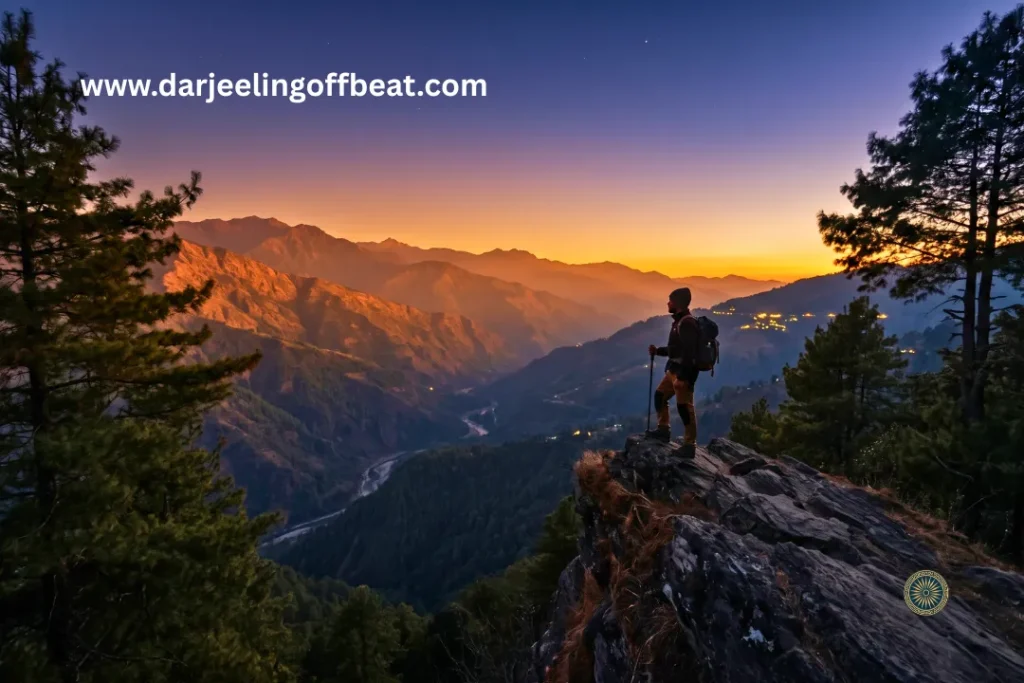
Chisang Village Kalimpong, sits within the Todey-Tangta Gram Panchayat, positioned along what’s essentially a natural frontier — about 4 kilometres by road from the actual Indo-Bhutan boundary. The village overlooks Bhutan’s Tendu Valley, sometimes called the Tenda Plateau in regional geography, and on its higher ridgelines you get panoramic views of the Nathula-Doklam mountain complex and the Rachela range.
These are not minor geographical features. The Doklam plateau has geopolitical significance that extends well beyond tourism, and seeing that landscape from a quiet Kalimpong hillside village gives it a human context that no news article can replicate.
The broader Kalimpong Range here displays dramatic physiographic variation — from low river basins at around 300 metres to high ridgelines pushing past 3,000 metres. Chisang sits comfortably in the middle of that range, benefiting from a high-altitude subtropical-to-temperate microclimate that produces the kind of biodiversity usually associated with protected reserves. Which makes sense, because Chisang borders one — the Neora Valley National Park, one of the most biodiverse protected areas in the Eastern Himalayas.
That proximity to Neora Valley is not incidental to Chisang Village Kalimpong’s character. It means the forest surrounding the village is dense, intact, and alive with species that have no reason to be anywhere near a tourist. It also means the village sits away from major commercial transport corridors — which is why motor traffic here is minimal, the air is genuinely clear, and the nights are properly dark.
Chisang Village Kalimpong: Getting There
Chisang is in the Gorubathan CD Block, accessible via the Kalimpong district road network.
From Kalimpong town: Approximately 35–40 kilometres, roughly 1.5 to 2 hours by road depending on route and conditions.
From New Jalpaiguri (NJP): Around 90–95 kilometres — NJP is the primary railhead for the entire region and well connected to major Indian cities.
From Bagdogra Airport: Approximately 85–90 kilometres.
From Siliguri: Around 75–80 kilometres via the foothills.
The road passes through Gorubathan town and then climbs — through the kind of scenery that rewards those who look out the window rather than at their phones. The final stretch into Chisang Village Kalimpong runs through forest and along ridge lines with occasional valley glimpses that hint at what’s waiting.
The Forest, the Border, and the View
Let’s talk about what makes Chisang Village Kalimpong genuinely different from most offbeat hill destinations in West Bengal.
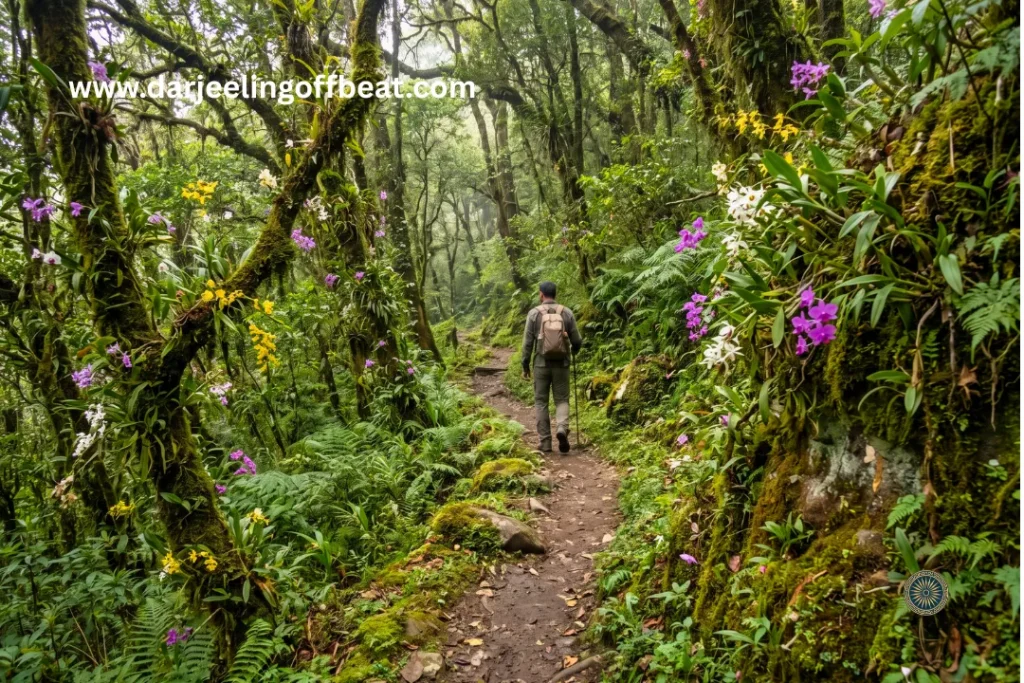
First, the forest. Because the village edges against Neora Valley National Park’s wilderness corridor, the surrounding habitat is extraordinary. Wild orchids grow in the forest understorey. Medicinal herbs used in traditional Himalayan medicine grow along the trails.
The broadleaf evergreen canopy is thick and layered in the way that only old, undisturbed forest can be. And the wildlife — rare and endangered birds, mammals that rarely appear near human settlement — moves through this corridor because the forest is large enough and intact enough to support them.
For birdwatchers, this is serious territory. The eastern Himalayan borderlands produce species lists that serious birders travel from across the country to attempt.
Second, the border view. From Chisang’s higher points, you look directly into Bhutan. The Tendu Valley spreads out below in Bhutanese territory, and the Rachela range forms the distant horizon. On clear evenings — particularly in autumn and winter when atmospheric haze is minimal — the lights of Bhutanese border settlements become visible across the valley divide. There’s no dramatic ceremony to this moment.
You’re simply sitting on a hillside in India watching another country’s evening begin. It’s quieter and more affecting than it sounds.
The Village — People, Culture, and Architecture
Chisang Village Kalimpong is part of the Todey-Tangta Gram Panchayat, which had a recorded population of 5,290 people across 1,119 households in the 2011 Census. The village itself is a low-density, dispersed settlement — houses and homestay farmsteads spread among terraced agricultural plots rather than clustered in a single centre.
Walking through Chisang means moving between properties with forest and farmland in between, which gives the whole place a breathing, open quality that concentrated villages often lack.
The community here is multi-ethnic in the way characteristic of the Kalimpong hills — Nepali, Bhutia, Lepcha, Kiranti, and Bantawa communities living alongside each other across generations. Nepali functions as the common language for daily life and commerce, alongside English, Hindi, Bengali, and various indigenous languages depending on the household.
The architecture is one of Chisang Village Kalimpong’s subtler pleasures. Local dwellings and homestay buildings combine traditional Himalayan timber-and-masonry construction with Goan-influenced sloped rooflines and wide peripheral verandas. This hybrid isn’t accidental — the form has evolved practically, offering seismic resilience, efficient monsoon drainage, and excellent solar gain in winter.
But it also looks distinctive, sitting differently from the standardised concrete constructions that have replaced traditional building in many hill towns.
Walking past these homestays in the afternoon, when the sun catches the timber, and the verandas are occupied with drying herbs or sleeping cats, is a reminder that architectural character is usually the byproduct of solving practical problems well.
The Cardamom Story — Agriculture, Blight, and Reinvention
Chisang has a complicated agricultural history that’s worth understanding because it explains so much about how the village operates today.
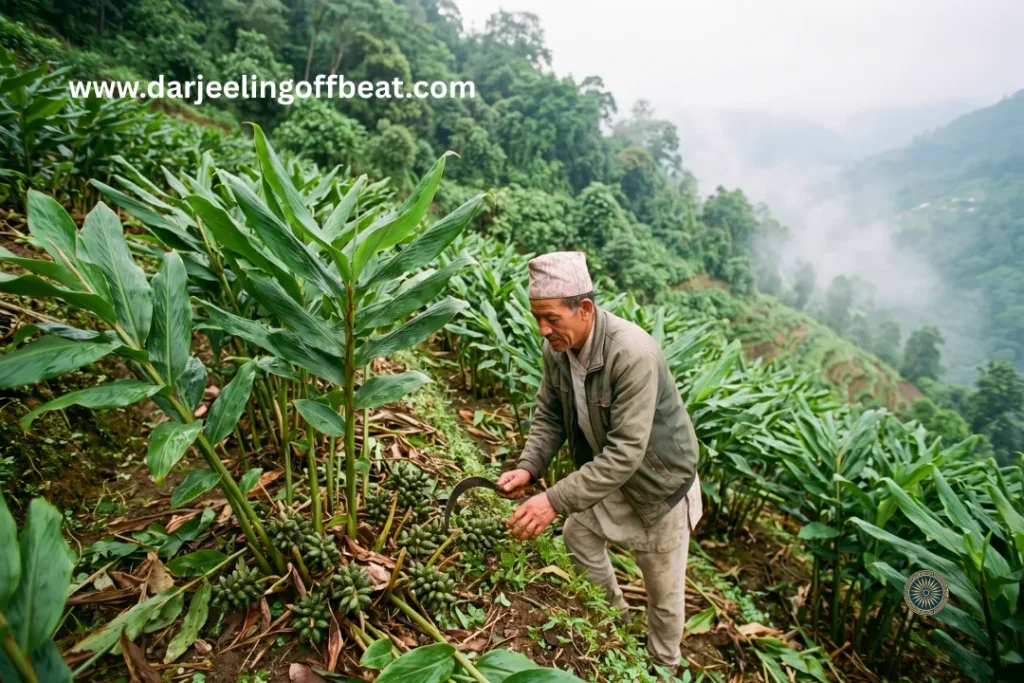
For generations, the local economy centred on black cardamom — specifically the high-grade organic variety (Amomum subulatum) that thrives in this region’s fertile soils and humid microclimate. Chisang Village Kalimpong was regionally recognised as a serious cardamom production centre, and the crop sustained families across the Todey-Tangta precinct for decades.
Then the diseases came. The Chirke and Foorkey complexes — viral and fungal blights that are now well-documented across the Himalayan cardamom belt — caused severe and widespread crop failures over recent decades. Yields collapsed. Families who’d built their livelihoods around cardamom found themselves farming land that was no longer reliably productive.
What happened next is genuinely interesting. Rather than abandoning agriculture or migrating, the community restructured. Farmers diversified into ginger, citrus fruits, broom grass, and organic table vegetables. And critically, they integrated small-scale homestay facilities directly into their farmsteads — creating an economic model where tourism income supports farm maintenance and soil conservation, while the traditional rural landscape continues to function as both the product and the preservation mechanism.
It’s a quietly elegant solution to a real problem. Visiting Chisang Village Kalimpong, you’re participating directly in that model. Your stay funds the farm. The farm sustains the landscape. The landscape is why you came.
What to Eat in Chisang Village Kalimpong
The food in Chisang is one of the most distinctive aspects of staying here, and it deserves its own section.
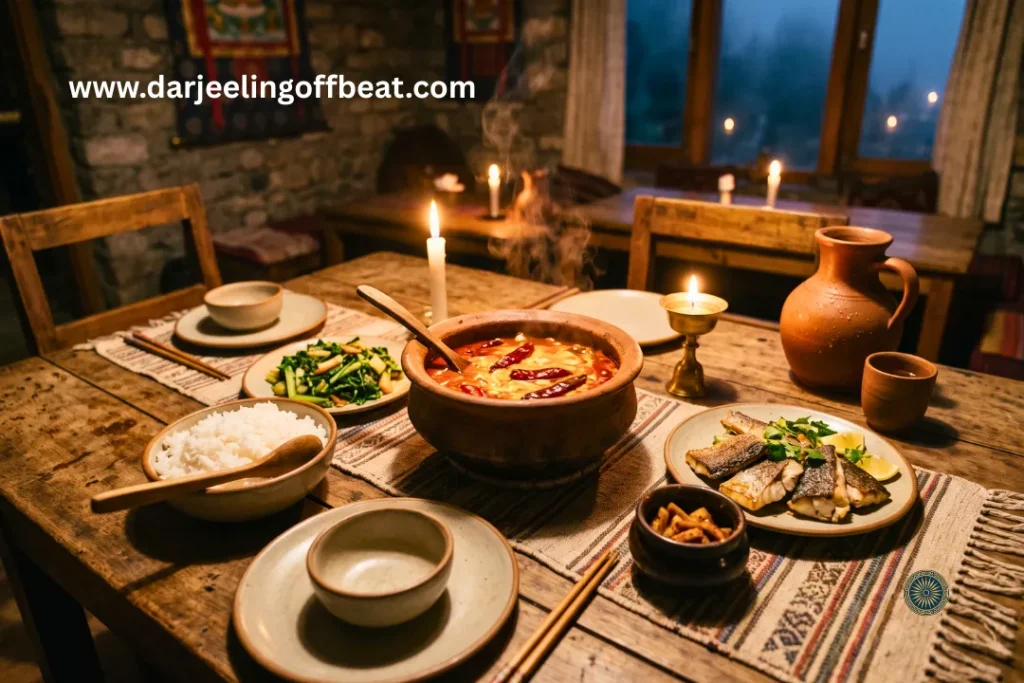
Local culinary traditions sit at a remarkable crossroads — Nepalese hill foodways meeting Tibetan influences meeting Bhutanese border cuisine. The proximity to Bhutan means Ema Datshi appears regularly on Chisang tables. This is the Bhutanese national dish: hot chilli peppers cooked with fresh farm cheese into something that manages to be simultaneously warming and fiery and deeply satisfying. Finding Ema Datshi in a West Bengal village homestay is unusual, and in Chisang it’s served not as a novelty but as a natural part of the daily menu.
Busty chicken from local free-range village flocks is a staple — village-raised, properly flavoured in the way commercially raised poultry never is. Fresh Himalayan trout from local mountain streams appears on the menu when available. Organic vegetables come directly from the terraced farm plots you can see from your window.
Traditional cured meats and fermented preserves fill the winter pantry with preparations that have remained essentially unchanged for generations.
Eating here is an exercise in understanding how geography shapes diet. The Bhutanese influence on the plate is a direct reflection of the Bhutanese valley visible from the ridge.
Offbeat Destinations in North Bengal: A Journey to Lesser-Known Landscapes
Seasons and When to Visit Chisang homestay Kalimpong
October to February — Peak Clarity
The best time to see the Bhutan border views and the Rachela range in full clarity. Post-monsoon air is clean, atmospheric haze is minimal, and on good days the views extend well into Bhutanese territory. Cold at night in December and January — pack accordingly — but days are often pleasantly warm and sunny.
March to May — Spring in the Forest
Wild orchids bloom in the Neora Valley corridor. The forest is at its most colourful and active. Birdwatching is excellent as migrant species move through. Temperatures are comfortable across most of the day.
June to September — Monsoon
Heavy rainfall, dense mist, and forest in extraordinary green intensity. Road conditions can be problematic — check local reports before travelling. But the forest around Chisang in monsoon is genuinely spectacular for those who can navigate the logistics.
Barmek Village, Kalimpong: Where Kanchenjunga and the Teesta River Share the Same View
The Eco-Tourism Circuit Around Chisang
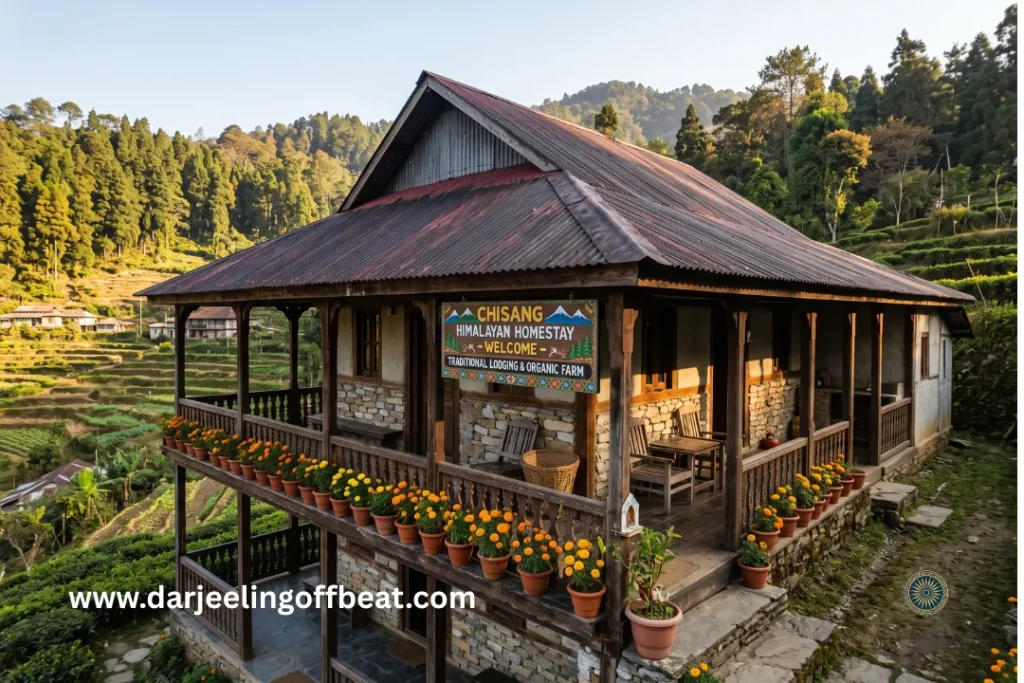
Chisang connects naturally to a broader network of destinations across eastern Kalimpong district, making it a strong anchor point for a multi-day offbeat itinerary.
Neora Valley National Park is the immediate neighbour — accessible for guided forest walks and birding expeditions from Chisang itself.
Lava and Lolaygaon are nearby hill stations offering a different character — Lava especially is known as a birding destination and sits within the same ecological corridor.
Gorubathan serves as the local service town and a transit point, with its own lower-altitude river valley character contrasting with Chisang’s ridge elevation.
The Bhutan border viewpoints accessible from Chisang’s higher ridgelines are in themselves a destination — particularly at dusk, as the Tendu Valley lights begin appearing.
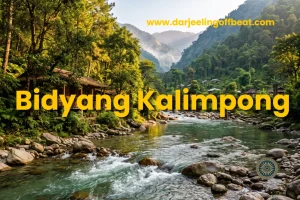
Bidyang Village, Kalimpong: A Riverside Escape You Didn’t Know You Needed
Who Is Chisang Offbeat Kalimpong For?
Chisang works for a specific kind of traveller. Not someone looking for a managed resort experience or a checklist of attractions. Someone who wants to understand a place — its history, its ecology, its border geography, the way its people adapted when their primary livelihood failed and built something new.
It works for birdwatchers and naturalists for whom Neora Valley access from a proper village base is worth the journey. For those drawn to frontier landscapes — not in a military or political sense, but in the simple geographical sense of standing at the edge of one world and looking into another.
And for those who eat mindfully and care about where food comes from, because in Chisang, that question has unusually direct answers.
It is not the easiest place to reach. It doesn’t have a famous viewpoint with a selfie board. But it has something rarer — genuine character, a real story, and a landscape that hasn’t been shaped primarily for tourist consumption.
That’s increasingly hard to find. When you do find it, you tend to remember it.
Bhalukhop Kalimpong: The Quiet Mountain That Wakes Up in Gold
Elevation: ~4,600 feet (1,400 m)
Location: Gorubathan CD Block, Kalimpong District, West Bengal
Border proximity: ~4 km from Indo-Bhutan boundary
From NJP: ~90–95 km | From Bagdogra: ~85–90 km
Best seasons: October–May
Ecological neighbour: Neora Valley National Park
Don’t miss: Bhutan border dusk view, Ema Datshi dinner, forest trail into Neora corridor, cardamom farm walk
Here in the Blog post we covered all topics like Chisang village Kalimpong, Chisang offbeat Kalimpong, Indo-Bhutan border village West Bengal, Gorubathan offbeat tourism, Neora Valley village stay, Chisang homestay Kalimpong, Bhutan border view Kalimpong, offbeat places near Kalimpong, Kalimpong ecotourism, Tendu valley view Kalimpong, Rachela range Kalimpong, Chisang cardamom village, offbeat North Bengal tourism, Kalimpong district hidden village, Neora Valley National Park border, eastern Himalayan borderland travel, Ema Datshi Kalimpong food, wild orchid trail Kalimpong, birdwatching Neora Valley, West Bengal Bhutan border travel
- Kashyem Kaman Kalimpong Teesta Rangpo Confluence View 2026: The Cedar Ridge
 Kashyem Kaman Kalimpong Teesta Rangpo confluence view — Teesta-Rangpo confluence below and Kanchenjunga above — plus Cinchona heritage trails and cedar forest homestays at ₹1,250/day. There is a specific kind of view that requires exactly the right elevation — too high and the cloud covers everything, too low and the angle is wrong. Kashyem Kaman …
 - Kalijhora Homestay & Teesta Travel Guide: How a Picnic Spot Turned Into North Bengal’s Quietest Adventure HubKalijhora homestay guide: where to stay near the Teesta, rafting routes & prices, Panboo ridge views, and everything to plan your North Bengal trip If you’ve driven up NH10 from Siliguri toward Kalimpong or Darjeeling, you’ve passed through Kalijhora without necessarily noticing it. That’s kind of the point. It sits about 28 kilometres north of …
- Goiri Gaon, Kalimpong: The Village the Forest Kept Secret — Now With the Full StoryGoiri Gaon Kalimpong Neora Valley offbeat — red panda corridor, Maria Busty 1891 church, Pedong Silk Route ruins, and homestay-only model. Complete offbeat guide inside. There are places in the Eastern Himalayas that exist in a kind of geographical grace — tucked far enough from the main roads that the noise of modern hill tourism …
- Gitkolbong Village Kalimpong: The Village That Climbs From River to RidgeGitkolbong village Kalimpong near Lava, with tea plantations, the Gitkhola river, and a ridge trail to Gitkolbong Top with Kanchenjunga views. Complete offbeat travel guide inside. Some places reveal themselves slowly. You arrive, and the first impression is modest — a quiet mountain village, some terraced farmland, a stream you can hear before you see …
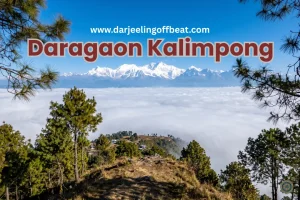
- Daragaon Kalimpong Kanchenjunga View Where the Clouds Stay Below YouDaragaon Kalimpong Kanchenjunga view— offers a rare sea-of-clouds sunrise view with the world’s third-highest peak floating above the Teesta valley. Complete travel guide inside. There’s a moment that happens at Daragaon — usually around six in the morning, usually in October or November — that people struggle to describe accurately afterwards. You’re standing at the …
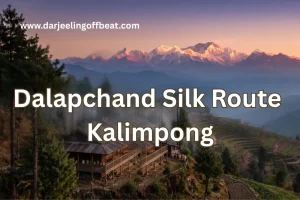
- Dalapchand Silk Route Kalimpong: Where West Bengal Meets SikkimSome destinations, like Dalapchand Silk Route Kalimpong, exist because someone put them on a map, and others exist because the landscape demanded them. Dalapchand is the second kind. Sitting right on the border zone between Kalimpong district in West Bengal and Pakyong district in East Sikkim, this quiet mountain hamlet occupies a genuinely rare position. …
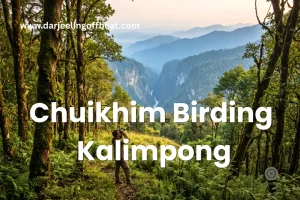
- Chuikhim birding Kalimpong: That Sits Between Two WorldsThere’s a particular kind of traveller who plans a trip around a bird. Who wakes before the alarm, walks quietly into the forest before dawn, and stands absolutely still for twenty minutes because something small and extraordinary might appear in the canopy above. If you know this feeling — or suspect you might — then …
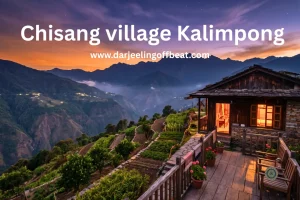
- Chisang Village Kalimpong: Where India Ends and Bhutan BeginsThere’s something quietly extraordinary about standing at the edge of a country and not at an airport or a formal border crossing, but on a hillside at dusk, looking across a valley into another nation’s lights. No fence in sight, no checkpoint, just a ridge and a silence and the slow understanding that the world …
- Bidyang Village, Kalimpong: A Riverside Escape You Didn’t Know You NeededSome places earn their reputation through grandeur — towering peaks, famous monasteries, names that appear on every travel list. And then there are places like Bidyang Kalimpong, which earn theirs more quietly. The sound of a river running over stones. The smell of cardamom on a warm afternoon. A valley so tucked away from the …




North Bengal's offbeat magic is my muse. I find adventure in whispering waterfalls, vibrant village life, and breathtaking Himalayan vistas. Join me as I delve deeper, seeking stories and experiences beyond the mainstream, from Darjeeling's tea havens to the unexplored corners of this incredible region